
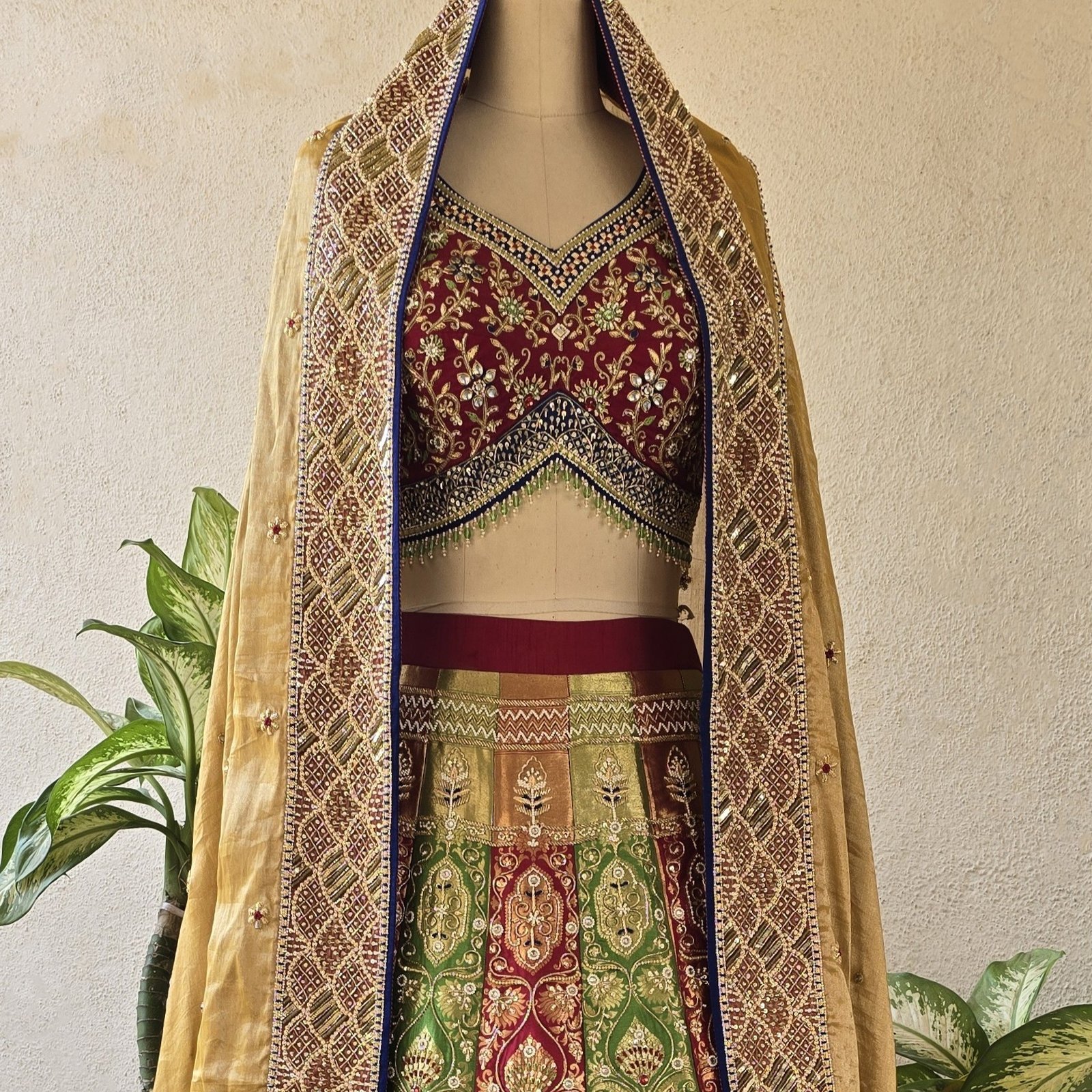
Ask any bride who got married in the UK last year what she’d do differently, and there’s a decent chance the answer involves her outfit and the word earlier.
Not because anything went wrong, necessarily. Usually because the last six weeks were spent on WhatsApp at midnight chasing a courier, or squeezing in an alteration between a hen do and a visa appointment for someone’s cousin. It’s avoidable. It just needs you to start before it feels urgent.
Here’s what the timeline actually looks like when your outfit is being made for you, here, rather than bought off a rail.
How far in advance should you order a bridal lehenga?
For a bridal lehenga with real hand embroidery, nine to twelve months is comfortable. Six is workable. Under four and you’re limiting your choices — not impossible, but the design starts bending around the deadline rather than the other way round.
For everything else — your mehndi outfit, sangeet, reception gown, the registry office look — four to six months each is plenty, and most brides sort these in one or two conversations once the main outfit is settled.
For mums, sisters and bridesmaids, three to four months. They always leave it later than they should. You already know this.
Why UK brides need longer than brides in India
If you were getting married in Delhi, you could walk into a shop in Chandni Chowk in March for a December wedding and nobody would blink. The karigars are down the road. Fittings are a taxi ride away. If the blouse is wrong you go back on Saturday.
Planning a wedding from Ealing or Leicester or Glasgow, none of that is true. Whether your outfit is being made in India and shipped, or made here, the feedback loop is longer. Every round of “can we take this in slightly” costs days rather than hours. Build that in and the whole thing stops feeling like a race.
There’s also the calendar to think about. Indian wedding season runs roughly November to February, and workshops on the subcontinent are at capacity through it. Diwali eats another few weeks. The monsoon slows embroidery and dyeing in some regions. If your timeline crosses any of those, add a month.
Twelve months out: the enjoyable part
This is when you look, and only look. Save images. Screenshot the sleeve you liked on someone at your friend’s sangeet. Notice that you keep coming back to the same three colours — that’s more useful information than any Pinterest board with 400 pins on it.
You don’t need to know what you want yet. You need to know what you don’t. Most brides arrive at a first consultation certain about one thing and completely open on everything else, and that’s a perfectly good place to start from.
Nine months out: the first real conversation
Book your consultation. Bring your dates, your venue, your inspiration, and — genuinely useful — a photo of an outfit you’ve worn before that you felt good in.
This is where design direction gets agreed, fabrics get chosen, and you find out what your ideas actually cost. Hand embroidery is priced by the hour of work in it, so a slightly simpler border across a wider area often looks richer than dense zardozi on a panel nobody sees when you’re sitting down. That kind of trade-off is easier to talk through with fabric on the table than over email.
You’ll leave with an estimated delivery date. Write it in the wedding spreadsheet next to the venue balance.
Six months out: it’s being made
Measurements are taken, the base is cut, and the embroidery goes on the frame. There’s not much for you to do here, which is exactly why this is the right time to think about the other outfits — mehndi, sangeet, reception — while your fabric supplier still has the colours you liked.
If you’re planning any changes to your fitness or body over the next few months, say so now rather than later. It’s a completely normal thing to mention and it changes how a bodice is constructed — nobody is going to make it awkward.
Three months out: first fitting
The garment goes on you for the first time. Almost nothing is ever perfect at this stage and that’s the point of the fitting. Length, blouse fit through the back and armhole, how the skirt sits when you sit down, whether the dupatta drapes the way you imagined or needs weighting.
Bring the shoes you’ll actually wear, or a pair the same height. Lehenga length is set from the floor up.
Six weeks out: final fit
Small adjustments only by now. This is also when you should practise — properly practise — pinning the dupatta, walking up steps in the skirt, and sitting through a two-hour ceremony in the blouse. Do it once at home and you won’t spend your own wedding thinking about it.
Two weeks out
Your outfit should be hanging in a garment bag, steamed, with everything that goes with it in one place: petticoat, safety pins, the right underlayer, jewellery you’ve already tried on with it. Give someone reliable the job of transporting it. Not the groom.
If you’ve got less time than this
Plenty of weddings come together in four months, and plenty of beautiful outfits get made in that window. You’ll want to lean towards fabric and drape doing the heavy lifting rather than dense hand embroidery, and be decisive early. What you lose is optionality, not quality.
Come and talk anyway. It’s usually more achievable than it feels at 1am when you’re panicking about it.
The things that quietly eat your timeline
- Indecision. By far the biggest one. Three weeks of “let me just check with my mum” is three weeks off the embroidery.
- Waiting for the venue to confirm before starting the outfit. You don’t need the venue. You need the date.
- Coordinating with other people’s outfits. Lovely idea. Add a month.
- Shipping and customs, if any part of it is coming from India. Duty on Indian-made clothing dropped to zero in July 2026, but VAT still applies over £135, there is the courier’s fee on top, and parcels get held for a week or two more often than anyone tells you — the detail is here.
- The second reception in another city that gets added in month seven. It happens constantly.
Where to start
If your wedding is more than six months away, you’re in good shape — the main thing is to have the first conversation while you still have every option open.
We make bespoke bridal lehengas and custom Indian wedding dresses to measure, in London, with consultations by appointment or online if you’re further afield.
Book a consultation and bring your date. We’ll work backwards from it together.
Also worth reading
- Getting your wedding outfit made in India or in the UK — an honest comparison, including customs and the fitting problem.
- Mother of the bride at an Indian wedding: what to wear — silhouettes, colours and the blouse that makes or breaks it.
